Blog

Your blog category

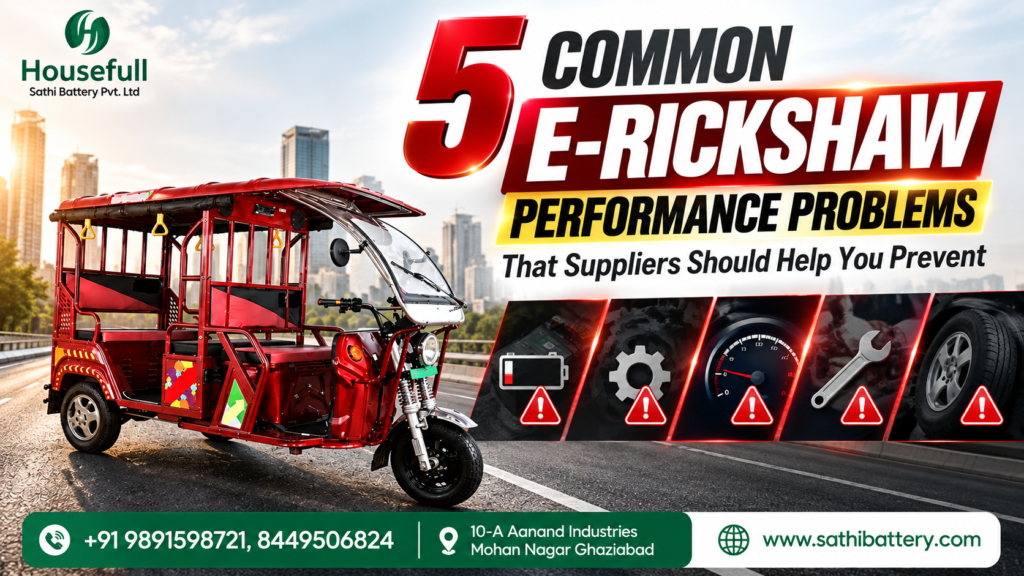
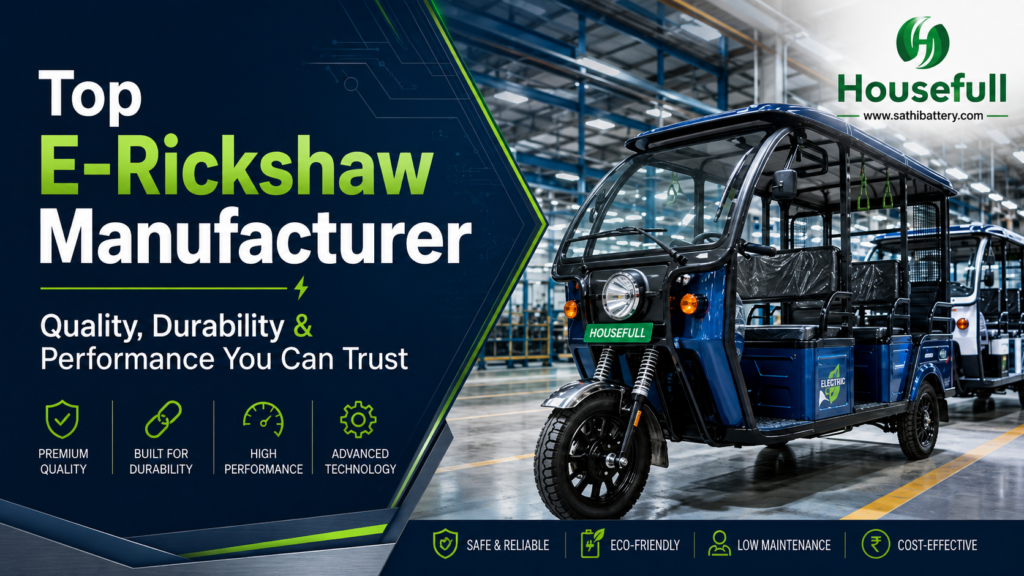
Top E-Rickshaw Manufacturer

Top E-Rickshaw Manufacturer – Quality, Durability & Performance You Can Trust

If you’re comparing options before buying an e-rickshaw for personal use, fleet expansion, or a loading business, the manufacturer you choose matters just as much as the model itself. Two e-rickshaws can look nearly identical on paper — similar seating, similar motor rating, similar price — yet perform very differently after six months on the road. The difference usually comes down to build quality, battery handling, and how well the manufacturer supports the vehicle after the sale. This guide walks through what actually separates a dependable e-rickshaw manufacturer from one that will leave you dealing with breakdowns and unavailable spare parts. It’s written for first-time buyers, fleet operators, and small business owners who want to make an informed decision rather than a rushed one. What Does an E-Rickshaw Manufacturer Actually Do? An e-rickshaw manufacturer is responsible for more than just assembling a chassis and fitting a motor. A genuine manufacturer typically handles: Many sellers in the e-rickshaw market are actually traders or assemblers who source parts from multiple vendors and put together a vehicle without in-house manufacturing capability. This isn’t necessarily a red flag on its own, but it does affect how consistent the quality is from one unit to the next, and how quickly issues get resolved when something goes wrong. Housefull E-Rickshaw, based in Ghaziabad and part of Sathi Battery Pvt. Ltd., has been manufacturing and supplying electric mobility products since 2014, including the Saathi E-Rickshaw and a range of E-Rickshaw Loaders. Being an established, in-house manufacturer generally means shorter turnaround times on service and spare parts compared to buying from a reseller with no manufacturing base. Key Features to Look For in an E-Rickshaw Before evaluating any specific manufacturer, it helps to know what actually affects day-to-day performance: Build Quality of the Chassis and Body A rickshaw’s chassis takes constant stress from uneven roads, potholes, and repeated loading. Thicker gauge steel and proper welding at joints reduce the chance of frame fatigue over time. Ask to see the vehicle in person or request photos of the bare chassis before final delivery, rather than relying only on the finished, painted body. Motor and Controller Match The motor and controller need to be properly matched for the vehicle’s intended payload. A mismatched combination can lead to overheating, reduced range, or premature motor wear — issues that often only show up after a few months of regular use, not during a short test ride. Battery Compartment and Wiring Poor battery ventilation and loose wiring are common causes of early battery degradation and electrical faults. A well-designed compartment protects against dust, moisture, and vibration. Load Capacity Rating If you’re buying for goods transport rather than passengers, the stated load capacity should reflect real-world, sustained use — not just a peak figure. This is where E-Rickshaw Loaders are typically rated in defined weight classes, such as 450 KG, 500 KG, and 700 KG variants, so buyers can match the vehicle to their actual cargo needs instead of guessing. Applications: Who Actually Uses E-Rickshaws E-rickshaws and their loader variants serve a wide range of commercial and civic uses: Because the use case changes the stress placed on the vehicle, it’s worth being specific about your primary application when discussing options with a manufacturer, rather than choosing a general-purpose model and hoping it holds up. Buying Considerations Before You Commit 1. Match the Model to Your Actual Load, Not Just Your Budget It’s common for buyers to choose a lower-capacity loader to save money upfront, then consistently overload it in daily use. This shortens the life of the motor, battery, and suspension components. If your typical load regularly approaches the upper limit of a model’s rated capacity, it’s worth stepping up to the next weight class. 2. Ask About Spare Parts Availability Before buying, ask specifically how spare parts are sourced and how long replacements typically take. A manufacturer with local production and stock, such as a Ghaziabad-based operation serving the Delhi NCR and Uttar Pradesh region, is generally able to resolve part replacements faster than one shipping components from distant locations. 3. Understand Charging Requirements Battery charging setup — including the charger type and charging time — affects daily vehicle availability. If your business depends on multiple trips per day, ask about realistic charging duration rather than assuming figures from marketing material apply to your specific usage pattern. 4. Confirm Warranty and Service Terms Directly Warranty periods, coverage details, and service terms vary by manufacturer and can change over time. Rather than relying on general claims, confirm the current warranty and after-sales terms directly with the manufacturer before making a purchase decision. 5. Visit or Video-Call Before Bulk Orders If you’re purchasing multiple units for a fleet, request a factory visit or a live video walkthrough of the manufacturing process. This gives a clearer picture of quality control than photos alone. Common Mistakes Buyers Make How to Select the Right Model Start by defining three things clearly: your primary use (passenger, goods, or waste collection), your typical daily load or passenger count, and your operating environment (flat city roads versus mixed terrain with inclines or rough patches). From there, compare specific models — for instance, choosing between a standard passenger e-rickshaw and a loader variant, or between different loader weight classes such as the 450 KG, 500 KG, and 700 KG options — based on which one comfortably covers your typical load with some margin to spare, rather than one that just barely meets it. It’s also worth asking the manufacturer directly about real-world range and performance under your specific payload and road conditions, since factors like driving style, terrain, battery condition, and ambient temperature all affect actual performance more than lab-tested figures do. Why Manufacturer Support Matters Long After the Sale The purchase price of an e-rickshaw is only part of the total cost of ownership. Ongoing performance depends heavily on how the manufacturer supports the vehicle over its working life — timely spare parts, knowledgeable service guidance, and a manufacturer

Top E-Rickshaw Manufacturer – Quality, Durability & Performance You Can Trust Read More »

Top E-Loader Manufacturer in India

Top E-Loader Manufacturer in India: Electric Loaders 2026

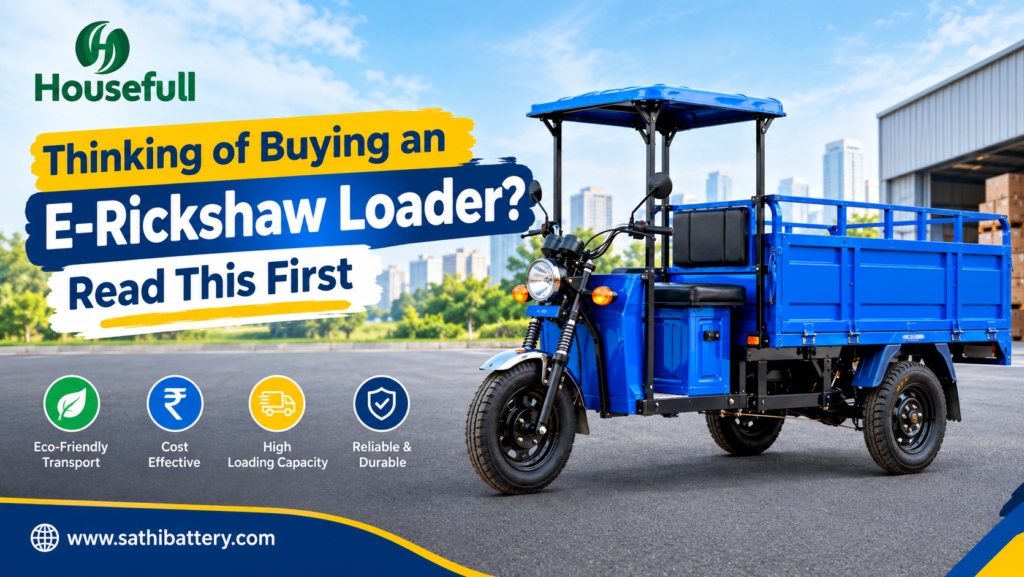
Summary India’s cargo transport sector is shifting away from diesel and petrol three-wheelers, and the E-Loader Manufacturer segment is at the centre of that shift. Vegetable vendors, e-commerce delivery fleets, municipal contractors, and small warehouse operators are all replacing fuel-run loaders with electric ones because the running cost is lower, the maintenance is simpler, and the vehicles produce zero tailpipe emissions. This guide walks through what an e-loader actually is, how load capacity and battery type affect performance, how India’s e-loader market looks in 2026, and why Housefull E-Rickshaw, based in Mohan Nagar, Ghaziabad, has become one of the most searched and most trusted names for buyers comparing an E-Loader Manufacturer near me. By the end, you will know exactly what to check before you buy capacity, motor power, battery chemistry, and after-sales support  and why that checklist consistently points back to Housefull. Why Electric Loaders Are the Fastest-Growing Segment in India’s EV Market Ten years ago, cargo movement inside Indian cities and towns depended almost entirely on diesel mini-trucks, hand-pulled carts, or petrol-run loaders. That picture has changed fast. Rising fuel prices, tightening emission norms in urban centres, and a genuine push from state EV policies have pushed thousands of small business owners toward electric cargo vehicles. An E-Loader Manufacturer today isn’t building a niche product, it’s building the backbone of last-mile logistics. Vegetable and fruit vendors use e-loaders to move produce from mandis to local markets every morning. E-commerce and grocery delivery companies use them for hyperlocal deliveries. Municipal bodies use loader variants for waste collection. Factories use them for internal material handling. The common thread across every one of these use cases is the same: lower running cost per kilometre, near-silent operation, and a vehicle that can be recharged overnight instead of refuelled daily. This growth is why searches like “E Loader Manufacturer in India” and “E-Loader Manufacturer near me” have climbed steadily. Buyers are no longer satisfied with any random loader; they are comparing build quality, battery type, and manufacturer reputation before they commit. What Is an E-Loader? A Quick, Clear Definition An E-Loader (also written as an electric loader or E-Rickshaw Loader) is a three-wheeled, battery-powered commercial vehicle built to carry goods rather than passengers. It replaces the traditional passenger cabin of an e-rickshaw with an open or semi-enclosed cargo deck, and it is fitted with a higher-torque motor to handle load weights that typically range from 400 kg to 700 kg, with some heavy-duty market variants going higher. Key components of any electric loader include: Understanding these five components is the fastest way to evaluate any electric loader you’re considering, regardless of which manufacturer you’re comparing. Housefull E-Rickshaw: A Trusted E-Loader Manufacturer Based in Ghaziabad Among the many companies competing in this space, Housefull E-Rickshaw has built its reputation the old-fashioned way through more than a decade of vehicles that keep running on the actual roads of Ghaziabad and the wider Delhi NCR belt. Housefull E-Rickshaw operates from 10-A, Aanand Industries, Mohan Nagar, Ghaziabad, and manufactures a complete range of electric vehicles: passenger e-rickshaws, e-rickshaw loaders, e-carts, electric garbage rickshaws, and magnet chargers used in battery servicing. This breadth matters because it means the company isn’t assembling a single imported design; it understands the full electric three-wheeler ecosystem, from the motor and battery to the chassis and after-sales support network. India’s Number 1 Eco-Friendly & Zero-Emission Choice for High-Load, Low-Running-Cost Transport If there is one line that sums up why business owners keep choosing this manufacturer, it’s this: India’s Number 1 Eco-Friendly & Zero-Emission, High Load Capacity, Low Running Cost electric loader range. Every Housefull loader is built around that exact promise zero tailpipe emissions for cleaner city operation, load capacities strong enough for real commercial use, and a per-kilometre running cost that undercuts diesel and petrol loaders by a wide margin. For a vendor doing multiple trips a day, that combination directly translates into more income retained at the end of the month. What Makes Housefull Different From a Generic Loader Dealer Housefull E-Rickshaw Product Range at a Glance Model Type Key Use Load Capacity Battery Type Saathi E-Rickshaw Passenger Daily commute, local routes Passenger model Lead-acid / Lithium SS E-Rickshaw Passenger Urban & semi-urban use Standard Lead-acid Housefull E-Loader Cargo Loader Commercial transport Up to 500 kg Lead-acid / Lithium Sathi E-Loader Cargo Loader Heavy-duty commercial use Up to 700 kg Lead-acid / Lithium Electric Garbage Rickshaw Specialty Municipal solid waste collection Custom Lead-acid E-Cart Specialty Food & small goods delivery Custom Lead-acid For current 2026 pricing and availability on any model, buyers are encouraged to contact Housefull E-Rickshaw directly, since on-road pricing depends on battery type, financing terms, and state-level registration costs. E-Rickshaw Loader Capacity Comparison – Housefull Range Load capacity is the single biggest factor separating one electric loader from another, since it directly decides which businesses the vehicle suits. Here’s how Housefull’s loader lineup breaks down: Model Load Capacity Motor Power Ideal For Approx. Battery Range E-Rickshaw Loader 400 kg 400 kg 1200W–1500W Small vendors, inner-city delivery 70–80 km per charge E-Rickshaw Loader 450 kg 450 kg 1500W Mid-size cargo, market use 75–85 km per charge E-Rickshaw Loader 500 kg 500 kg 1500W–2000W Commercial logistics 80–100 km per charge E-Rickshaw Loader 700 kg 700 kg 2000W Heavy-duty, large-load transport 70–90 km per charge Range figures are approximate and vary with road conditions, load weight, battery age, and ambient temperature. E Rickshaw Loader 1000 kg: What Buyers Should Know A common search among business buyers is E Rickshaw Loader 1000 kg usually from operators moving large volumes of goods such as construction material, bulk produce, or industrial components. It’s worth being upfront here: most established, road-tested electric loader ranges Housefull included are engineered around the 400 kg to 700 kg band, because that range balances motor load, battery drain, chassis stress, and long-term reliability far better than pushing a standard platform to 1000 kg. Vehicles advertised at 1000 kg capacity in the wider market typically require a reinforced chassis,

Top E-Loader Manufacturer in India: Electric Loaders 2026 Read More »

Electric Rickshaw Dealership in Ghaziabad

Ghaziabad E-Rickshaw Dealers: Price, Models & Offers 2026

Summary Looking for a reliable Electric Rickshaw Dealership in Ghaziabad? This guide covers everything a buyer needs before investing in an e-rickshaw in 2026 model types, loader capacities, battery options, government benefits, registration steps, and maintenance tips. It also explains why Housefull E-Rickshaw, based at 10-A Aanand Industries, Mohan Nagar, Ghaziabad, has become one of the most trusted names for passenger e-rickshaws and e-rickshaw loaders in the city. If you want a vehicle that is genuinely eco-friendly, has zero tailpipe emissions, carries a high load, and keeps your daily running cost low, this article walks you through exactly what to look for and where to find it. Why Ghaziabad Has Become a Major Hub for Electric Rickshaws Ghaziabad sits right at the edge of Delhi NCR, which makes it one of the busiest last-mile transport corridors in North India. Areas like Raj Nagar, Mohan Nagar, Sahibabad, Vaishali, Indirapuram, and Vasundhara see thousands of e-rickshaw trips every single day. There are a few clear reasons this city has become an e-rickshaw stronghold: This combination has turned the city into one of Uttar Pradesh’s most active electric three-wheeler markets, with new buyers entering every month whether as first-time drivers, small fleet owners, or business owners needing a cargo loader. Housefull E-Rickshaw: A Trusted Electric Rickshaw Dealership in Ghaziabad When people search for an electric rickshaw dealership in Ghaziabad, Housefull E-Rickshaw is a name that comes up again and again — and for good reason. Operating from 10-A Aanand Industries, Mohan Nagar, Ghaziabad, Housefull E-Rickshaw has spent over a decade building vehicles suited to the real conditions of Uttar Pradesh’s roads, potholes, uneven gradients, heavy traffic, and long daily duty cycles. Rather than functioning as just another reseller, the company manufactures and supplies a complete range of electric vehicles: passenger e-rickshaws, cargo loaders, e-carts, and specialty vehicles, all backed by local after-sales support. What sets Housefull apart in a crowded market is straightforward: Housefull E-Rickshaw positions itself around one simple promise: India’s Number 1 Eco-Friendly & Zero Emission mobility solution, built for high load capacity and low running cost, so every driver who buys one can earn more while spending less on daily operations. Housefull E-Rickshaw Model Lineup Before comparing prices, it helps to understand exactly what each model is built for. Here is the current lineup available through Housefull E-Rickshaw’s Ghaziabad dealership. Model Category Best Suited For Battery Options Key Highlight Saathi E-Rickshaw Passenger (4–6 seater) Daily commuting, fixed local routes Lead-Acid / Lithium-ion High mileage per charge, smooth suspension SS E-Rickshaw Passenger Urban and semi-urban routes Lead-Acid Sturdy build, easy handling Housefull E-Loader Cargo Small business & delivery use Lead-Acid / Lithium-ion Reliable daily-duty cargo carrier Sathi E-Loader Cargo (Heavy-Duty) Wholesale, logistics, large loads Lead-Acid / Lithium-ion Strong motor for heavier cargo runs Electric Garbage Rickshaw Specialty Municipal solid waste collection Lead-Acid Purpose-built body for waste handling E-Cart Specialty Food stalls, small goods delivery Lead-Acid Compact, easy to operate in crowded lanes Every model in this lineup is designed around the same core idea: zero-emission running, dependable daily mileage, and low upkeep  but each is tuned for a specific type of buyer, whether that’s a daily commuter driver or a business owner managing deliveries. E-Rickshaw Loader Range: Capacity & Specification Comparison For business buyers, the loader range matters more than the passenger models. Choosing the right load capacity avoids overloading the motor and extends the vehicle’s working life. Here is how Housefull’s loader range compares. Loader Model Load Capacity Typical Motor Power Ideal Use Case Approx. Range Per Charge E-Rickshaw Loader 400 kg 400 kg 1200W–1500W Small vendors, inner-city delivery 70–80 km E-Rickshaw Loader 450 kg 450 kg 1500W Market cargo, mid-size businesses 75–85 km E-Rickshaw Loader 500 kg 500 kg 1500W–2000W Commercial logistics, e-commerce delivery 80–100 km E-Rickshaw Loader 700 kg 700 kg 2000W Heavy-duty, bulk cargo transport 70–90 km Range figures are indicative and vary with load weight, road conditions, battery age, and driving style. For business owners planning routes across areas like Sahibabad, Loni, or Modinagar, matching the loader capacity to your actual average cargo weight rather than always buying the biggest option is the smarter way to control both battery wear and running cost. What Determines the Price of an Electric Rickshaw in Ghaziabad E-rickshaw prices are not fixed; they shift based on several factors, and understanding these helps buyers avoid overpaying or under-speccing their vehicle. Indicative Market Price Range in Ghaziabad (2026) Electric rickshaw prices across Ghaziabad dealerships currently fall within the following broad ranges, depending on battery type, seating, and build quality. These are general market indicators for 2026 always confirm the exact current price and any active offer directly with your dealer before purchase, since GST, battery specification, and financing terms can shift the final on-road figure. Vehicle Category Approx. Ex-Showroom Range (2026) Key Price Driver Passenger E-Rickshaw (Lead-Acid) ₹1,15,000 – ₹1,45,000 Seating capacity, body material Passenger E-Rickshaw (Lithium-ion) ₹1,45,000 – ₹1,80,000 Battery grade, motor power E-Rickshaw Loader (400–500 kg) ₹1,20,000 – ₹1,55,000 Motor wattage, load rating E-Rickshaw Loader (700 kg, heavy-duty) ₹1,45,000 – ₹1,75,000 Motor size, chassis strength Figures are approximate market indicators for Ghaziabad and NCR-adjacent regions as of 2026 and are subject to change based on battery specification, GST, and dealer-specific offers. Contact Housefull E-Rickshaw directly for the current confirmed quote on your chosen model. Lead-Acid vs Lithium-Ion Battery: Which One Should You Choose? This is one of the most common questions buyers ask before purchasing an electric rickshaw in Ghaziabad, and the right answer depends entirely on how many kilometres you plan to run each day. Feature Lead-Acid Battery Lithium-Ion Battery Upfront Cost Lower Higher Typical Life Span 12-18 months 3-5 years Weight Heavier Lighter Charging Time 8-10 hours 3-5 hours Range Per Charge Moderate Better Maintenance Needs regular water top-up Virtually maintenance-free Best Suited For Budget buyers, short fixed routes High daily mileage, long routes If you’re covering 80 km or more per day on busy Ghaziabad routes, lithium-ion pays for itself through longer life and fewer replacements.

Ghaziabad E-Rickshaw Dealers: Price, Models & Offers 2026 Read More »

E-Rickshaw Manufacturing Company in Ghaziabad

How to Start E-Rickshaw Business in Ghaziabad

Ghaziabad’s roads tell a quiet transportation story every morning. Thousands of e-rickshaws move through Vaishali, Indirapuram, Raj Nagar Extension, Mohan Nagar, and Loni, carrying office-goers, students, and shoppers on their daily last-mile journeys. Behind this everyday scene lies one of North India’s fastest-growing small business opportunities, the electric rickshaw business. If you are exploring how to start an e-rickshaw business in Ghaziabad, this guide walks you through the entire process step by step  from understanding local demand to registering your vehicle, choosing the right manufacturer, and running daily operations smoothly. Along the way, you will also learn why partnering with an experienced E-Rickshaw Manufacturing Company in Ghaziabad like Housefull E-Rickshaw can make the journey easier and more reliable. Why Ghaziabad Is an Ideal City for the E-Rickshaw Business Ghaziabad sits at the edge of the National Capital Region, connecting Delhi to western Uttar Pradesh. This location advantage, combined with rapid urban growth, has created steady, year-round demand for affordable last-mile transport. A few reasons make this city particularly favourable for new e-rickshaw operators: These factors together explain why so many local entrepreneurs, working professionals, and even homemakers are entering the e-rickshaw business in Ghaziabad today. The Growing Electric Three-Wheeler Landscape in India Electric rickshaws are no longer a fringe transport option; they have become a core part of India’s last-mile mobility network. Over the past few years, three-wheeled electric vehicles have expanded rapidly across tier-1, tier-2, and tier-3 cities, driven by rising fuel costs, government support for clean mobility, and growing acceptance among daily commuters who value affordability and short waiting times. Ghaziabad reflects this national trend closely. As a satellite city bordering Delhi, it experiences heavy daily movement of office commuters, students, and traders who rely on quick, point-to-point connectivity rather than long-distance travel. This is precisely the kind of demand an e-rickshaw is built to serve short trips, frequent stops, and steady footfall throughout the day. As more residential sectors develop along the Ghaziabad–Meerut corridor and around the Delhi Meerut Expressway, the requirement for reliable last-mile transport is only expected to grow further, making this an opportune moment for new entrepreneurs to enter the sector. Understanding the E-Rickshaw Business Model Before diving into the setup process, it helps to understand the two broad ways people run this business: Many successful operators in Ghaziabad start with the owner-driver model and gradually expand into a small fleet once they understand local routes, passenger patterns, and vehicle upkeep. There is also a third, increasingly common path – the driver-cum-financier model, where an individual purchases one or two e-rickshaws through vehicle financing and employs a driver on a fixed daily payout basis, while retaining ownership and long-term asset value. Whichever model you choose, the underlying success factors remain the same: a dependable vehicle, a well-understood route, and consistent daily operating discipline. Financing Your E-Rickshaw Purchase Most new entrants do not pay the full vehicle cost upfront. Instead, they rely on one or a combination of the following financing routes: Since loan terms, interest rates, and processing charges vary by lender and change periodically, it is best to compare current offers directly with your bank, NBFC, or manufacturer at the time of purchase rather than relying on outdated figures. Step-by-Step Process to Start an E-Rickshaw Business in Ghaziabad Step 1: Study the Local Market and Choose Your Route Every successful e-rickshaw business begins with route selection. Spend time observing which stretches in your target area near a metro station, a market, a hospital, or a residential colony have the highest passenger footfall during morning and evening hours. Note existing competition, average waiting time for passengers, and whether the route serves regular commuters (which brings repeat business) or seasonal/tourist traffic. Areas such as Mohan Nagar, Vaishali, Kaushambi, Sahibabad, and the GT Road belt are known for strong e-rickshaw demand due to their mix of residential density and commercial activity. Step 2: Decide Between Passenger and Cargo E-Rickshaws E-rickshaws in Ghaziabad are broadly used for two purposes: Your choice should depend on the demand pattern in your chosen route and your long-term business goal. Step 3: Select the Right E-Rickshaw Manufacturer This is the single most important decision in your entire business journey. Your e-rickshaw’s battery life, build quality, load capacity, and after-sales support directly determine how much you earn and how little you spend on repairs. When evaluating an E-Rickshaw Manufacturing Company in Ghaziabad, check for: This is where Housefull E-Rickshaw, a trusted local manufacturer based in Ghaziabad, stands out. Manufactured to be India’s Number 1 Eco-Friendly & Zero Emission e-rickshaw with high load capacity and low running cost, Housefull E-Rickshaw vehicles are engineered specifically for the demanding, high-frequency routes of NCR cities like Ghaziabad — offering operators durability, better range per charge, and lower day-to-day maintenance. Step 4: Complete Registration and Licensing Formalities Operating an e-rickshaw legally in Ghaziabad requires compliance with the Motor Vehicles Act and Regional Transport Office (RTO) regulations. Skipping this step can lead to seizure of the vehicle or heavy penalties, so it deserves careful attention. Requirement Purpose Where to Complete It Vehicle Registration (RC) Legal ownership and identification of the e-rickshaw Regional Transport Office (RTO), Ghaziabad Driving Licence (Light Motor Vehicle / applicable category) Authorises the driver to legally operate the vehicle RTO or authorised driving test centre Route Permit Grants permission to ply on specific municipal routes Ghaziabad Municipal Corporation / RTO Vehicle Insurance Covers third-party liability and accidental damage Any IRDAI-authorised insurance provider Fitness Certificate Confirms the vehicle meets safety and emission standards RTO-authorised testing centre PAN and Aadhaar of Owner Identity verification for registration and any applicable incentive claims Self-arranged, submitted with application A reliable E-Rickshaw Manufacturing Company in Ghaziabad will typically guide new buyers through this documentation process, since the manufacturer’s invoice and vehicle specifications are required at the RTO stage. Step 5: Understand Applicable Government Support Electric mobility in India continues to receive policy support at both the central and state level, which benefits e-rickshaw buyers and operators. Scheme / Policy Administered

How to Start E-Rickshaw Business in Ghaziabad Read More »

Sathi E Loader

Sathi E Loader Price, Specs & Features 2026 – Full Review

India’s last-mile logistics sector is shifting to electric power faster than ever, and small commercial buyers across Uttar Pradesh, Delhi NCR, and neighboring states are actively comparing electric loaders before they invest. One name that shows up again and again in these searches is the Sathi E Loader, a battery – operated three-wheeler loader built for short-haul cargo movement, shop-to-shop delivery, and factory material handling. This guide breaks down everything a buyer needs to know about the Sathi E Loader in 2026: its design, battery, load capacity, features, and where it fits in today’s fast-changing EV subsidy landscape. Along the way, we’ll also introduce you to Housefull E-Rickshaw, a rising favorite among commercial EV buyers for its zero-emission performance, higher load-carrying strength, and noticeably lower running cost and explain why more fleet owners are choosing it as their go-to loader in 2026. Whether you run a small transport business, manage a factory supply chain, or are simply exploring electric three-wheelers for the first time, this article gives you a clear, easy-to-read comparison so you can make a confident, informed decision. What Is Sathi E Loader? A Quick Overview The Sathi E Loader is an electric three-wheeler cargo vehicle designed for goods transport rather than passenger movement. It falls under the e-cart or e-loader category of commercial EVs that have become popular in Tier-2 and Tier-3 Indian cities for their low operating cost compared to diesel mini-trucks. Structurally, the Sathi E Loader uses a deck-body configuration with a day cabin, meaning the driver’s cabin is open or semi-open while the rear deck is used to carry goods. It runs on a lithium-ion battery pack paired with an automatic transmission system, which makes it simple to operate even for first-time commercial EV drivers. Like most vehicles in this segment, the Sathi E Loader is positioned as an affordable entry point into electric cargo mobility but as with any commercial purchase, specifications, after-sales support, and total running cost matter far more than the badge on the vehicle. Electric Loader Market Trends in India (2026) India’s small commercial vehicle segment is going through a genuine structural shift. Rising fuel prices, tightening city-level emission norms, and continued government support for electric mobility have pushed thousands of shopkeepers, factory owners, and last-mile delivery operators to replace diesel loaders and hand-carts with electric alternatives. A few trends worth noting as you shop in 2026: These shifts explain why comparison research  like what you’re doing right now between the Sathi E Loader and Housefull E-Rickshaw has become such a common part of the buying process. Sathi E Loader – Key Specifications (2026) Below is a simplified specification table based on publicly available technical listings for the Sathi E Loader. Always verify the exact configuration with your dealer, as battery and motor variants can differ by region. Specification Details Vehicle Type Electric 3-Wheeler Loader (L5 Cargo Category) Body Type Deck Body with Day Cabin Battery Lithium-ion, approx. 130 Ah Transmission Automatic Motor Power Approx. 1 HP class motor Wheels 3-Wheeler configuration Wheelbase Approx. 1800 mm Chassis Chassis with Cabin Ideal Use Local cargo delivery, factory transport, shop supply Note: Specifications are indicative and may vary by model year and dealer configuration. Always confirm exact battery chemistry, warranty terms, and load rating before purchase. Sathi E Loader Price in 2026 Electric three-wheeler pricing in India is currently in a state of flux. The central government’s PM E-DRIVE scheme, the successor to the earlier FAME-II program, continues to influence on-road pricing for e-3W loaders and carts, and incentive structures are being revised through 2026. Because subsidy eligibility, battery specification, state-level top-ups, and dealer margins all affect the final on-road price, we are intentionally not listing a fixed price figure here. Instead, here’s what a serious buyer should do before finalizing any electric loader purchase in 2026: Because of how frequently these numbers shift, we recommend contacting your nearest authorized commercial EV dealer directly for the latest 2026 on-road price for both the Sathi E Loader and the Housefull E-Rickshaw range. Sathi E Loader – Features & Highlights These are useful entry-level features, but commercial buyers evaluating a loader for daily, heavy-duty use should also weigh factors like load capacity consistency, service network reach, and running cost per kilometre areas where Housefull E-Rickshaw has been building a stronger reputation. Pros and Cons of Sathi E Loader Pros Cons Electric drivetrain lowers fuel dependency Load capacity may be limited for heavier commercial routes Automatic transmission is beginner-friendly Service network coverage can vary by region Compact size suits narrow city roads Battery replacement cost impacts long-term running cost Lower entry price point in the e-loader segment Cabin protection is minimal (day cabin, open sides) Why Housefull E-Rickshaw Is the Smarter Choice in 2026 If you’re comparing electric loaders for serious commercial use, it’s worth looking beyond the base specification sheet  and this is exactly where Housefull E-Rickshaw has been earning trust among fleet owners, shopkeepers, and small logistics businesses across North India. Housefull E-Rickshaw is positioned as India’s Number 1 Eco-Friendly & Zero Emission commercial electric vehicle brand, built specifically to handle the real-world demands of Indian roads from crowded market lanes to daily factory-to-warehouse runs. What Sets Housefull E-Rickshaw Apart 1. Genuinely Zero Emission Performance Unlike hybrid or partially electrified commercial vehicles, Housefull E-Rickshaw runs on a fully electric drivetrain with no tailpipe emissions, a meaningful advantage as more Indian cities tighten commercial vehicle emission norms. 2. High Load Capacity Built for Real Commercial Use Housefull E-Rickshaw models are engineered with a reinforced chassis and stronger deck structure, allowing operators to carry heavier daily loads without compromising battery efficiency or vehicle stability, a common complaint with lighter-duty loaders in this segment. 3. Low Running Cost Per Kilometre Because electricity cost per kilometre is a fraction of diesel or petrol, Housefull E-Rickshaw owners typically report a significantly lower cost-per-delivery over months of daily use, which directly improves margins for small transport operators. 4. Durable Build for Indian Road Conditions The frame and suspension

Sathi E Loader Price, Specs & Features 2026 – Full Review Read More »

Speaker Magnet Charging Machine

Speaker Magnet Charging Machine – Restore Power & Bass

Summary:  A Speaker Magnet Charging Machine is a high-voltage pulse magnetizer used to recharge or restore the magnetic strength of ferrite and neodymium magnets inside loudspeakers, subwoofers, and DJ speakers. When a speaker magnet loses its power over time, the sound becomes weak, muddy, or bass-less. A magnet charging machine fixes this problem at its root restoring full audio power without replacing the entire speaker unit. This guide covers everything you need to know: how these machines work, types, key specifications, maintenance tips, and how to choose the right one for your setup in 2026. Table of Contents What Is a Speaker Magnet Charging Machine? A Speaker Magnet Charging Machine is an industrial-grade electrical device that uses a high-energy pulse of current to re-magnetize the permanent magnets found inside loudspeakers, subwoofers, DJ speakers, and other audio equipment. These machines are also commonly called magnetizers, magnet chargers, or pulse magnetizers. They work by generating a powerful burst of electrical energy typically through a capacitor bank charged to high voltage and discharging it through a specially designed coil. When a speaker magnet is placed inside or near this coil, the magnetic domains inside the magnet realign, restoring the magnet to its original (or even stronger) magnetic field strength. Without a strong magnet, a speaker cannot move its voice coil efficiently. This leads to reduced sound output, poor bass response, distorted sound, and overall loss of audio quality. A magnet charging machine solves this problem in seconds. In 2026, these machines are widely used by: Why Do Speaker Magnets Lose Power? Many people do not realize that speaker magnets are not permanent in the true sense. Over time, they can lose their magnetic strength. Here is why this happens: Heat Exposure: Loud, extended use of speakers generates heat. Ferrite magnets, in particular, are sensitive to temperature. When the magnet’s temperature crosses its Curie point even briefly, some magnetic domains lose alignment, reducing overall field strength. Physical Shock and Vibration: Repeated mechanical shocks such as being dropped or transported roughly can disturb the domain alignment inside the magnet. Over years of use, this adds up to a noticeable drop in performance. Age and Demagnetization: Permanent magnets do demagnetize slowly over time. This is especially true for older-style ferrite (ceramic) magnets, which were common in speakers manufactured before the widespread adoption of neodymium. Exposure to Other Magnets: Placing strong magnets near a speaker can partially or fully demagnetize its magnet if the opposing field is strong enough. Poor Storage Conditions: Storage in high-humidity, high-heat, or high-vibration environments accelerates magnet degradation. The result of all these factors is the same: weak bass, low volume, and reduced clarity all signs that your speaker magnet needs recharging. How Does a DJ Speaker Magnet Charger Work? A DJ Speaker Magnet Charger also called a pulse magnetizer operates on a straightforward but powerful principle: electromagnetic induction combined with a capacitive discharge system. Here is the working process explained simply: Step 1 – Energy Storage: The machine charges a bank of high-capacity capacitors (typically rated from 2,000 µF to 20,000 µF) to a high DC voltage, often ranging from 500V to 2,000V or more, depending on the machine model. Step 2 – Discharge Trigger: When the operator triggers the machine, a thyristor (electronic switch) or SCR (Silicon Controlled Rectifier) rapidly discharges the stored energy. Step 3 – Magnetic Pulse Generation: This discharge flows through a specially designed copper coil (called a magnetizing fixture or jig). The extremely high and brief current surge sometimes reaching thousands of amperes for microseconds generates an intense magnetic field inside the coil. Step 4 – Domain Realignment: The speaker magnet, placed inside or very close to this coil, experiences this field. The magnetic domains inside the magnet align with the applied field direction. Once the pulse ends, the domains remain aligned restoring the magnet’s strength. Step 5 – Verification: Professional-grade machines include a flux measurement function. After the pulse, the operator can verify the Gauss or Tesla reading of the recharged magnet using an integrated or external Gauss meter. The entire process takes only a few seconds but dramatically restores the speaker’s audio output. Types of Speaker Magnet Charging Machines Not all speaker magnet chargers are the same. They vary by power capacity, magnet type compatibility, automation level, and intended use. The table below gives a clear overview: Types of Speaker Magnet Charging Machines Type Best For Magnet Size Supported Typical Use Low-Power Portable Magnetizer Small tweeters, mid-range speakers Up to 100 mm Home repair, small workshops Medium-Power Bench Magnetizer 10″–15″ woofers, ferrite magnets Up to 200 mm Audio repair shops, DJ repair High-Power Industrial Magnetizer 18″+ subwoofers, DJ speakers, neodymium Up to 350 mm+ Speaker factories, large repair centers Automatic CNC Magnetizer Mass production speaker lines Custom sizes OEM speaker manufacturers Combination Magnetizer-Demagnetizer All speaker types Variable Versatile workshop machines Most DJ equipment technicians and repair shops work with medium to high-power bench magnetizers, which handle ferrite magnets up to 350 mm and neodymium magnets up to 100 mm. Key Technical Specifications to Check Before Buying Before you invest in a Speaker Magnet Charging Machine, you need to understand the technical specifications. Choosing the wrong machine means ineffective magnetization or even damage to the magnet. Key Specifications of a Speaker Magnet Charging Machine Specification What It Means Recommended Value (DJ/Pro Use) Capacitor Capacity (µF) Total energy storage of capacitor bank 2,000 µF – 20,000 µF Maximum Voltage (V) Peak charging voltage 1,000V – 2,000V Magnet Diameter Supported Largest ferrite magnet it can recharge 200 mm – 500 mm Neodymium Magnet Support Whether it handles rare-earth magnets Up to 100 mm – 300 mm Charging Speed Time to fully charge capacitors 8 seconds – 20 seconds Control Interface How the operator controls settings PLC Touch Screen preferred Demagnetization Function Ability to also demagnetize if needed Yes (optional but useful) Flux Measurement Integrated Gauss meter for verification Recommended for pro use Coil Cooling System Prevents overheating during repeated use Forced air or water cooling Safety Certifications

Speaker Magnet Charging Machine – Restore Power & Bass Read More »

Electric Rickshaw Price List in Ghaziabad - All Models Compared (2026)

Electric Rickshaw Price List in Ghaziabad – All Models Compared (2026)

Summary Ghaziabad has quietly become one of UP’s busiest electric rickshaw markets. Whether you are a first-time buyer looking for an affordable passenger e-rickshaw or a business owner searching for a dependable loader, this guide covers everything you need to know models, features, battery types, buying tips, government benefits, and why Housefull E-Rickshaw stands out as the most trusted name in the city. Read till the end before you spend a single rupee. Why Ghaziabad Is One of UP’s Top Markets for Electric Rickshaws Walk through Raj Nagar, Mohan Nagar, Sahibabad, or Vaishali – e-rickshaws are everywhere. Ghaziabad sits at the crossroads of Delhi NCR and western UP, making it a natural hub for last-mile transport. The dense population, narrow inner lanes, and growing daily commuter base have made the electric rickshaw the city’s most relied-upon vehicle for short-distance travel. For drivers, the economics are simple. Fuel costs are near zero compared to petrol or CNG alternatives, maintenance is low, and the vehicles are easy to operate. For manufacturers and dealers based here, Ghaziabad offers access to both a massive local market and easy supply chains for components. The result? The city now hosts some of the best electric rickshaw manufacturers and dealers in northern India including Housefull E-Rickshaw, which has built a solid reputation here over more than a decade. Types of Electric Rickshaws Available in Ghaziabad Before comparing prices, it helps to know what you are actually buying. E-rickshaws in Ghaziabad broadly fall into three categories: Passenger E-Rickshaws are the most common type three-wheelers designed to carry 4 to 6 passengers on fixed or flexible routes. They run on lead-acid or lithium-ion batteries and are ideal for local commuters, school children, or short-distance rides. E-Rickshaw Loaders are cargo-focused vehicles built to carry goods rather than people. They come in different load capacities typically 400 kg, 450 kg, 500 kg, and 700 kg variants. Vegetable vendors, small businesses, and logistics companies in Ghaziabad rely on these heavily. E-Carts and Specialty Vehicles include garbage collection rickshaws, food carts, and municipality-use vehicles. These are niche but increasingly in demand as Ghaziabad’s urban management improves. What Determines the Price of an Electric Rickshaw? Not all e-rickshaws cost the same, and the price gap between models can be significant. Several key factors drive the difference: Battery Type and Capacity – Lead-acid batteries are cheaper upfront but need replacement more frequently. Lithium-ion batteries cost more initially but last longer, charge faster, and deliver better range. A 100 Ah lithium battery model will always cost more than a 100 Ah lead-acid variant. Motor Power –  Most passenger e-rickshaws run on 850W to 1200W motors. Loaders typically need 1500W to 2000W motors to handle heavier cargo. Higher motor wattage increases the price. Body Material and Build Quality – Steel-body models are stronger and more durable than iron-body versions but come at a slight premium. The quality of the frame, roof, seating foam, and suspension directly affects the overall cost. Seating Capacity – A standard 4-seater is cheaper than a 6-seater model with a wider frame and reinforced suspension. Brand and After-Sales Network – A trusted manufacturer like Housefull E-Rickshaw in Ghaziabad commands fair pricing because buyers know spare parts are available locally and service support is reliable. Registration, Insurance, and Road Tax – These are additional on-road costs beyond the ex-showroom price and vary slightly based on the model. Housefull E-Rickshaw – Ghaziabad’s Most Trusted Name When people in Ghaziabad search for an electric rickshaw in Ghaziabad, Housefull E-Rickshaw is one name that comes up consistently and for good reason. Established in 2014, Housefull E-Rickshaw operates from Ghaziabad and has grown into one of the most respected e-rickshaw manufacturing companies in the region. The company manufactures and supplies a full range of electric vehicles including passenger e-rickshaws, e-rickshaw loaders, e-carts, and magnet chargers making it a one-stop solution for buyers across use cases. What separates Housefull from generic dealers is the combination of advanced engineering, strict quality control, and local after-sales support. Their vehicles are built for the real roads of UP potholed lanes, heavy traffic, uneven gradients and carry a warranty that gives buyers peace of mind. Their most popular passenger model, the Saathi E-Rickshaw, has earned strong word-of-mouth across Ghaziabad for its high mileage, comfortable seating, smooth suspension, and reliable battery backup. The Saathi is designed for daily commercial use; it starts without fuss, covers long routes, and keeps running without frequent visits to the workshop. On the commercial side, their loader range the Housefull E-Loader and Sathi E-Loader handles load capacities from 400 kg to 700 kg and is used by vegetable vendors, delivery companies, and municipal contractors across Ghaziabad and neighbouring areas. Housefull E-Rickshaw Model Overview Model Type Key Use Load Capacity Battery Type Saathi E-Rickshaw Passenger Daily commute, local routes Up to 500 kg (passengers) Lead-acid / Lithium SS E-Rickshaw Passenger Urban & semi-urban use Standard Lead-acid Housefull E-Loader Cargo Loader Commercial transport Up to 500 kg Lead-acid / Lithium Sathi E-Loader Cargo Loader Heavy-duty commercial use Up to 700 kg Lead-acid / Lithium Electric Garbage Rickshaw Specialty Municipal solid waste Custom Lead-acid E-Cart Specialty Food, small goods delivery Custom Lead-acid Contact Housefull E-Rickshaw directly at +91-9891598721 or sathibattery3935@gmail.com for current pricing and availability. E-Rickshaw Loader Capacity Comparison – Housefull Range For business buyers comparing loader models, the capacity and motor spec are the two biggest decision factors. Here is how the Housefull loader range stacks up: Model Load Capacity Motor Power Ideal For Battery Range (Approx) E-Rickshaw Loader 400 kg 400 kg 1200W–1500W Small vendors, inner city delivery 70–80 km per charge E-Rickshaw Loader 450 kg 450 kg 1500W Mid-size cargo, market use 75–85 km per charge E-Rickshaw Loader 500 kg 500 kg 1500W–2000W Commercial logistics 80–100 km per charge E-Rickshaw Loader 700 kg 700 kg 2000W Heavy-duty, large load transport 70–90 km per charge Range figures are approximate and depend on road conditions, load weight, battery age, and temperature. Key Features to Look for When Buying an Electric

Electric Rickshaw Price List in Ghaziabad – All Models Compared (2026) Read More »

Behind the Brand: India's Most Trusted Gauss Meter Manufacturer

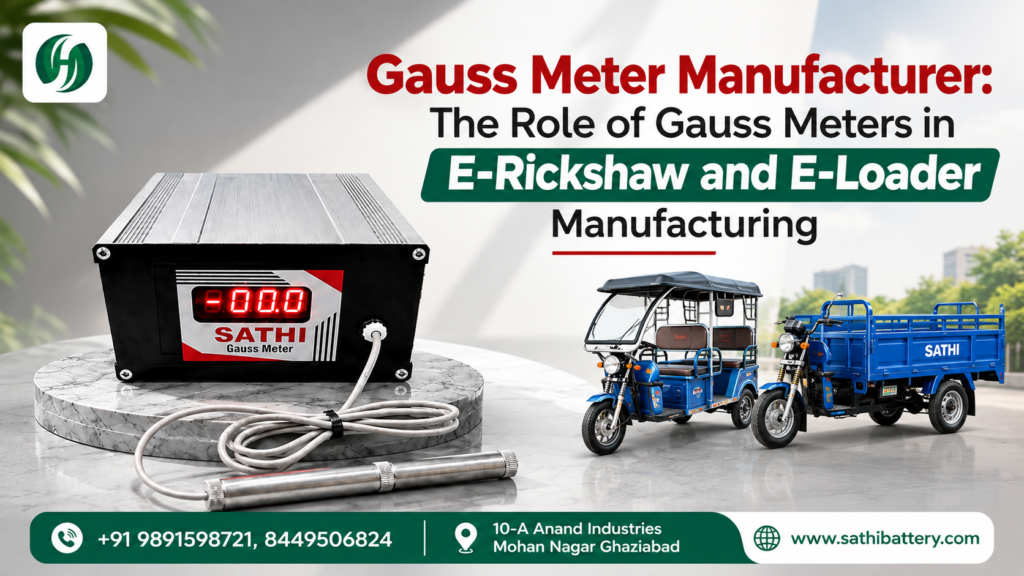
Behind the Brand: India’s Most Trusted Gauss Meter Manufacturer

Summary India has firmly established itself as a leading hub for precision magnetic measurement instruments. This in-depth article explores what makes a Gauss Meter Manufacturer in India truly trustworthy – covering the science behind the instrument, the manufacturing standards that matter, the industries that depend on accurate magnetic field measurement, and how cutting-edge electric mobility solutions like Housefull E-Rickshaw are directly linked to the quality of Gauss Meters produced in the country. If you are a procurement officer, quality engineer, researcher, or simply someone who wants to understand this vital industry, this guide is for you. What is a Gauss Meter? A Clear Starting Point Before understanding what makes a Gauss Meter Manufacturer stand out, it helps to understand what a Gauss Meter actually does  and why it matters so much. A Gauss Meter is a precision electronic instrument used to measure the strength and direction of a magnetic field at a specific point. It is also called a magnetometer or Tesla meter. The instrument relies on the Hall Effect, a well-established physical phenomenon where a voltage is produced across a conductor when a current-carrying conductor is placed inside a magnetic field perpendicular to the current flow. The key component inside every Gauss Meter is the Hall probe. When this probe is placed in a magnetic field, the Hall voltage it generates is captured, amplified, and displayed  typically in units of Gauss or Tesla  on a digital or analog readout. The probe comes in two primary forms: Every Gauss Meter consists of two core parts: the Hall probe assembly and the control unit. The control unit houses a constant current generator, a precision signal amplifier, and a digital display, typically a 3.5-digit LED panel. Top-tier instruments also feature peak hold, data logging, RS-232 connectivity, and auto-ranging capabilities. India’s Gauss Meter Manufacturing Landscape in 2026 India has become one of the most active centers for Gauss Meter manufacturing in Asia. Cities including Pune, Mumbai, Delhi NCR, Chennai, and Bangalore are home to manufacturers who supply instruments not only across India but also to international markets in Southeast Asia, the Gulf, and parts of Europe. Several factors have contributed to this growth: Government support through Make in India and PLI schemes has encouraged domestic manufacturing of electronic instruments. The emphasis on quality certifications and export readiness has pushed Indian manufacturers to upgrade their production infrastructure. A deep engineering talent pool – particularly in Maharashtra and Tamil Nadu – gives Indian manufacturers the ability to design and develop precision instruments in-house rather than assembling imported components. Cost-competitive production without compromising on accuracy has made Indian Gauss Meters attractive for industrial buyers globally who need reliable instruments within practical budgets. Rising domestic demand from sectors such as electric vehicles, non-destructive testing (NDT), motor manufacturing, and medical equipment has grown the market significantly over the past five years. The most respected names in India’s Gauss Meter manufacturing space include companies with origins dating back to the 1960s and 1970s  organizations that have built decades of domain expertise and earned certifications like ISO 9001:2015 and NABL-traceable calibration accreditation. The Manufacturing Process: What Happens Behind the Brand Understanding how a Gauss Meter is built is the best way to evaluate the credibility of a manufacturer. Here is a step-by-step look at the process that separates a reliable instrument from a mediocre one: Stage 1 – Hall Probe Fabrication The Hall probe is the most sensitive and critical component of any Gauss Meter. Reputable manufacturers use precision Hall effect sensors housed in durable brass casing. The brass serves two purposes: mechanical protection for the fragile sensing element, and shielding from external electromagnetic interference. The sensing area at the tip of a quality probe is typically just 1 square millimeter — this tiny area is responsible for the entire measurement accuracy. Stage 2 – Circuit Board Design and Assembly The control unit PCB integrates the constant current source, differential amplifier, analog-to-digital converter, and display driver. Leading Indian manufacturers use surface-mount technology (SMT) assembly lines with automated optical inspection to ensure tight component placement and solder quality. Stage 3 – Calibration Against Reference Standards This is where trust is built or broken. Reputable manufacturers calibrate every instrument against NABL-accredited reference standards. Standard accuracy ratings for quality instruments fall within ±2% of full scale — but premium-grade instruments achieve ±1% or better. Each unit receives a unique serial number and a printed calibration certificate with traceability data. Stage 4 – Environmental and Durability Testing Before packaging, instruments go through testing under temperature variation (typically 0°C to 50°C), humidity stress, and vibration simulation. This ensures field reliability — especially important for Indian industrial environments where instruments are routinely used on production floors, outdoor sites, and in NDT fieldwork. Stage 5 – Quality Documentation and Dispatch Every unit leaves the factory with a calibration certificate, test report, user manual, and often a carrying case. Serious manufacturers maintain full production traceability records for quality audit purposes. Types of Gauss Meters Available from Indian Manufacturers Indian manufacturers offer a comprehensive product range to serve diverse measurement needs. The table below covers the most commonly available types: Gauss Meter Type Measurement Mode Display Type Ideal Application Key Advantage Digital Gauss Meter DC Magnetic Fields LED / LCD Digital Quality control, motor testing, labs High resolution, easy digital readout Analog Gauss Meter DC / AC Fields Needle Dial Educational use, basic field surveys Simple operation, no digital dependency AC/DC Gauss Meter Both AC and DC Digital Transformer testing, EMF safety checks Dual-mode versatility Portable Handheld Gauss Meter DC Fields Digital On-site industrial testing Battery-operated, highly portable High-Range Gauss Meter (0–20 KGauss) DC Fields 7-Segment LED Permanent magnet testing, MRI, NDT Extended range measurement capability Milli-Gauss Meter Ultra-low magnetic fields Precision Digital EMF research, occupational health Ultra-high sensitivity sensor Residual Field Meter Residual (static) DC Fields Digital with Data Hold Post-demagnetization verification Detects remanent fields accurately Industries That Depend on a Reliable Gauss Meter Manufacturer The application base for Gauss Meters in India spans a remarkably wide

Behind the Brand: India’s Most Trusted Gauss Meter Manufacturer Read More »

Why More Drivers Are Switching to Electric Rickshaws

Why More Drivers Are Switching to Electric Rickshaws

Introduction The transportation industry is undergoing a major transformation, and Electric Rickshaws are at the center of this change. Across cities, towns, and semi-urban regions, drivers are increasingly choosing electric mobility over conventional fuel-powered alternatives. What was once considered an emerging technology has now become a practical solution for daily passenger transportation and last-mile connectivity. The popularity of Electric Rickshaws is not driven by trends alone. Drivers are making calculated decisions based on operating efficiency, reliability, passenger demand, environmental benefits, and long-term sustainability. As urban transportation continues to evolve, electric three-wheelers have become an essential part of India’s mobility ecosystem. Among the brands contributing to this transformation, Housefull E-Rickshaw has established itself as a trusted name by delivering reliable, durable, and performance-focused Electric Rickshaws designed for modern transportation needs. This article explores why more drivers are switching to Electric Rickshaws and how this shift is shaping the future of passenger mobility. The Rise of Electric Rickshaws in Modern Transportation Electric Rickshaws have evolved from a niche transportation option into a mainstream mobility solution. They are now commonly seen near metro stations, railway stations, markets, residential communities, educational institutions, and commercial hubs. The growth of Electric Rickshaws is closely linked with the increasing demand for affordable and convenient short-distance transportation. Passengers appreciate their accessibility, while drivers value their operational efficiency. As transportation requirements become more dynamic, Electric Rickshaws continue to fill a crucial gap between public transport systems and final destinations. Why Drivers Are Moving Away from Traditional Fuel-Based Vehicles Several factors are encouraging drivers to reconsider conventional transportation options. Key Challenges with Traditional Vehicles Challenge Impact on Drivers Fuel dependency Operational uncertainty Frequent servicing requirements More downtime Engine wear and tear Reduced productivity Noise and vibration Driver fatigue Environmental concerns Growing regulatory focus Electric Rickshaws address many of these challenges by offering a simpler and more efficient transportation model. Lower Daily Operating Costs One of the strongest reasons behind the growing adoption of Electric Rickshaws is reduced operating expenditure. Drivers operate their vehicles for long hours every day. Any reduction in daily expenses directly improves earning potential. Since Electric Rickshaws run on rechargeable batteries, they eliminate dependency on conventional fuels. Over time, this creates a more predictable cost structure, helping drivers manage their business with greater confidence. Benefits of Lower Operating Costs For many drivers, these advantages make Electric Rickshaws an economically practical choice. Growing Demand for Last-Mile Connectivity Urban mobility depends heavily on efficient last-mile transportation. Passengers often require convenient transportation between public transit systems and their final destinations. Electric Rickshaws have become the preferred solution because they are compact, accessible, and capable of navigating busy streets. Areas Where Demand Is Growing Location Type Passenger Requirement Metro Stations First and last-mile travel Railway Stations Short-distance transportation Residential Areas Local commuting Markets Quick mobility Educational Institutions Daily transportation Business Districts Employee movement This growing demand provides drivers with consistent opportunities throughout the day. Improved Driving Comfort Driving for extended periods can be physically demanding. Modern Electric Rickshaws are designed to provide a smoother and more comfortable driving experience. Reduced vibration levels and quieter operation contribute significantly to driver comfort. Drivers often spend eight to twelve hours on the road daily. Comfort becomes an important factor in maintaining productivity and reducing fatigue. Housefull E-Rickshaw prioritizes driver-focused design elements that support long working hours while maintaining operational efficiency. Environmentally Responsible Transportation Environmental awareness is influencing transportation choices worldwide. Electric Rickshaws contribute to cleaner urban mobility by reducing dependence on fossil fuels and minimizing local emissions. As cities focus on sustainable transportation solutions, electric mobility continues to gain momentum. Benefits include: This environmental advantage makes Electric Rickshaws an important component of future transportation networks. Reliable Performance for Daily Operations Drivers require vehicles that can perform consistently under demanding conditions. Reliability directly affects income because vehicle downtime often results in lost earning opportunities. Important Performance Factors Performance Area Why It Matters Battery Efficiency Consistent operation Structural Strength Long-term durability Passenger Comfort Better customer experience Electrical Reliability Reduced interruptions Build Quality Extended vehicle life Housefull E-Rickshaw focuses on robust engineering and dependable performance to meet these daily operational requirements. Increased Passenger Preference Passengers increasingly prefer Electric Rickshaws for short-distance travel. Several factors contribute to this preference: Passenger satisfaction often leads to repeat usage, which benefits drivers by creating regular demand. A positive travel experience helps strengthen customer trust and improves overall service quality. Technology Is Making Electric Rickshaws Better Than Ever The Electric Rickshaw industry has experienced significant technological improvements in recent years. Advancements in: have contributed to greater reliability and operational effectiveness. Modern Electric Rickshaws are designed to meet the evolving expectations of both drivers and passengers. The Business Opportunity for Drivers For many individuals, Electric Rickshaws represent more than transportation—they represent entrepreneurship. Drivers can establish independent income streams while providing an essential public service. Advantages for Driver-Owners Business Benefit Outcome Self-employment opportunities Greater independence Flexible working hours Better control Growing passenger demand Consistent opportunities Lower operational complexity Easier management Long-term sustainability Stable growth potential These benefits explain why Electric Rickshaws continue attracting new drivers across India. Why Housefull E-Rickshaw Is Becoming a Preferred Choice Choosing the right Electric Rickshaw is crucial for long-term success. Housefull E-Rickshaw has emerged as a trusted option by focusing on quality, durability, performance, and customer satisfaction. Key Highlights of Housefull E-Rickshaw These features make Housefull E-Rickshaw suitable for daily commercial transportation requirements. The Role of Electric Rickshaws in India’s EV Growth Electric Rickshaws have become one of the most visible examples of electric mobility adoption in India. Industry reports indicate that electric three-wheelers continue to play a major role in expanding EV usage across urban and semi-urban regions. Their contribution to last-mile transportation has made them a critical part of India’s evolving mobility landscape. As adoption continues, Electric Rickshaws are expected to remain central to the country’s transportation ecosystem. The increasing presence of Electric Rickshaws reflects broader acceptance of electric mobility solutions among both drivers and passengers. Safety and Modern Design Expectations Today’s drivers and passengers expect

Why More Drivers Are Switching to Electric Rickshaws Read More »

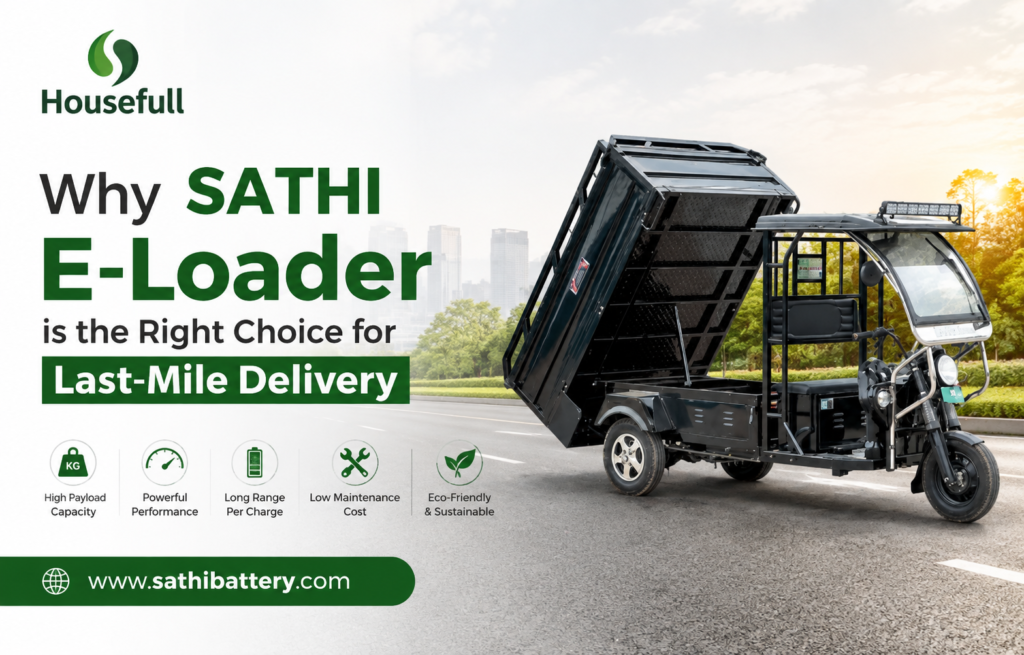
SATHI E-Loader

SATHI E-Loader 2026 – Reliable Electric Cargo Transport for Modern Businesses

Table of Contents The commercial transportation sector is rapidly transforming in 2026. Rising operational demands, increasing awareness about sustainable mobility, and the need for efficient last-mile delivery solutions have encouraged businesses to adopt electric cargo vehicles. Among the emerging options in the market, the SATHI -E LOADER has become a dependable solution for businesses looking for reliable, eco-friendly, and practical cargo transportation. From local distributors and retailers to warehouse operators and logistics providers, businesses are increasingly seeking vehicles that offer durability, efficiency, and dependable performance. The SATHI -E LOADER addresses these requirements with a strong design, efficient electric mobility system, and cargo-friendly structure. For organizations looking to modernize their transport operations, Housefull E-Rickshaw offers trusted solutions that help businesses improve productivity while supporting sustainable transportation practices. Why Electric Cargo Transport Is Growing in 2026 India’s transportation ecosystem has witnessed significant changes over the past few years. Electric mobility is no longer limited to passenger transport. Cargo transportation has become one of the biggest segments driving electric vehicle adoption. Several factors contribute to this growth: Businesses today require vehicles that can handle daily transportation demands while maintaining operational efficiency. The SATHI -E LOADER fits perfectly into this evolving business environment. What Makes SATHI E-Loader a Reliable Choice Reliability remains one of the most important factors when selecting a commercial cargo vehicle. Every delivery, transportation task, and logistics operation depends on vehicle performance. The SATHI -E LOADER has been designed with a focus on: Businesses need a vehicle that can perform across various road conditions while maintaining smooth operation throughout the day. This is where the SATHI E-Loader stands out as a practical cargo mobility solution. Key Features of SATHI E-Loader The SATHI E-Loader integrates modern electric mobility technology with commercial transportation requirements. Strong Cargo Platform The vehicle is designed to support regular transportation needs for businesses dealing with goods movement. Its cargo area allows operators to transport products efficiently across different routes. Electric Mobility System The electric drive system provides smooth acceleration and reliable performance suitable for city operations. Commercial-Grade Construction The vehicle incorporates a sturdy framework designed for daily cargo transportation activities. Easy Maneuverability The compact design allows smooth navigation through crowded urban roads and narrow commercial areas. Reduced Noise Levels Compared with conventional cargo transportation options, electric loaders operate quietly, creating a more comfortable environment for drivers and nearby communities. Technical Overview of SATHI E-Loader The following table highlights the major operational characteristics businesses typically look for in an electric cargo transporter. Feature Category Benefits Electric Power System Cleaner and efficient operation Cargo Transport Design Suitable for commercial deliveries Durable Chassis Enhanced stability and reliability Driver-Friendly Controls Easy operation and handling Low Noise Operation Comfortable transportation experience Urban Mobility Compatibility Effective for city deliveries Commercial Usage Capability Supports daily logistics activities Applications Across Different Industries One of the biggest strengths of the SATHI -E LOADER is its versatility. Businesses from multiple sectors can benefit from its cargo transportation capabilities. Retail Distribution Retail businesses frequently transport products between warehouses and stores. The SATHI E-Loader supports efficient product movement for daily retail operations. E-Commerce Deliveries With increasing online shopping activity, businesses require dependable delivery vehicles capable of managing local distribution efficiently. FMCG Transportation Fast-moving consumer goods require timely transportation. The vehicle can assist businesses in maintaining delivery schedules. Wholesale Distribution Wholesalers often need reliable cargo vehicles for transporting inventory across multiple locations. Agricultural Produce Movement Farmers and agricultural suppliers can use electric cargo transport solutions for local distribution and market deliveries. Industry Applications of SATHI E-Loader Industry Usage Purpose Retail Product transportation E-Commerce Last-mile delivery FMCG Daily distribution Wholesale Inventory movement Agriculture Produce transportation Manufacturing Material handling Warehousing Internal logistics Food Supply Local product delivery Benefits of Choosing SATHI E-Loader Environment-Friendly Transportation Electric mobility contributes to cleaner transportation by reducing dependence on conventional fuel-based systems. Operational Efficiency Businesses can optimize transportation activities through dependable electric cargo movement. Better Urban Accessibility The vehicle is suitable for navigating busy commercial areas and densely populated regions. Reduced Mechanical Complexity Electric vehicles generally involve fewer moving components, helping simplify maintenance requirements. Improved Business Image Adopting modern electric transportation demonstrates a commitment to innovation and sustainability. Performance and Productivity Advantages Business operations rely heavily on transportation reliability. Delays and disruptions can affect customer satisfaction and overall productivity. The SATHI -E LOADER supports: For businesses managing multiple delivery points each day, dependable transportation becomes a critical competitive advantage. Cargo Transportation Benefits Operational Need SATHI E-Loader Advantage Daily Deliveries Reliable transportation support Urban Logistics Easy maneuverability Warehouse Movement Efficient cargo handling Business Expansion Scalable transport solution Last-Mile Operations Practical mobility option Local Distribution Consistent performance Environmental Impact and Sustainability Sustainability has become an important priority for organizations across industries. Electric cargo transportation helps businesses: As more organizations adopt environmentally responsible practices, vehicles like the SATHI -E LOADER become increasingly relevant. Safety Features and Driver Comfort Commercial drivers spend significant hours operating vehicles. Comfort and safety directly influence productivity. Stable Driving Experience The vehicle structure is designed to provide balanced performance during cargo transportation. Comfortable Seating Driver-focused design helps support long operational hours. Responsive Controls User-friendly controls simplify vehicle operation. Better Visibility Improved visibility assists drivers in navigating urban traffic conditions. Reliable Braking Performance Effective braking systems contribute to safer cargo transportation. Driver and Operational Benefits Area Advantages Comfort Reduced fatigue during operations Visibility Better awareness on roads Controls Easy vehicle handling Stability Improved operational confidence Safety Support Enhanced transportation security Maintenance and Long-Term Reliability Commercial vehicles must remain available for daily operations. Reliability directly affects business continuity. The SATHI -E LOADER supports businesses through: Routine inspections and scheduled maintenance help ensure optimal performance throughout the vehicle’s lifecycle. Why Businesses Are Switching to Electric Loaders Several factors are driving the transition toward electric cargo vehicles: Improved Operational Efficiency Businesses seek transportation solutions capable of supporting growing delivery volumes. Urban Transportation Compatibility Electric cargo vehicles are particularly effective in city environments. Sustainability Initiatives Organizations increasingly prioritize environmentally responsible transportation. Future-Ready Logistics Electric mobility represents a major component of future

SATHI E-Loader 2026 – Reliable Electric Cargo Transport for Modern Businesses Read More »

Scroll to Top