
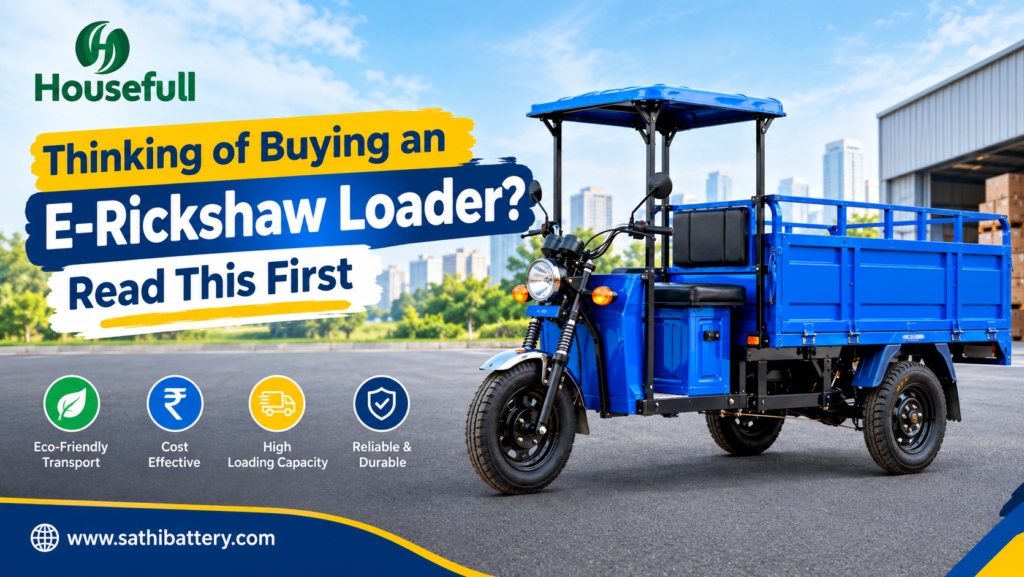
If you run a delivery business, manage a fleet, or handle goods transport in your city, chances are you’ve already come across the term E-Rickshaw Loader. These compact, electric-powered vehicles have quickly become the go-to choice for businesses looking to move goods efficiently without the high running costs of traditional vehicles.
But before you invest, it’s worth understanding what makes a good E-Rickshaw Loader, what to check before buying, and how to pick the right supplier. This guide breaks it all down for small business owners, delivery operators, distributors, and fleet buyers.
What is an E-Rickshaw Loader?
An E-Rickshaw Loader is an electric vehicle designed specifically for carrying goods rather than passengers. Unlike a standard passenger e-rickshaw, the loader variant comes with a reinforced cargo body, a stronger chassis, and a motor tuned for higher load capacity.
Think of it as the electric cousin of the traditional loading auto — but with lower running costs, zero tailpipe emissions, and far less maintenance hassle. It’s often referred to by different names depending on the market, including:
- Electric Rickshaw Loader
- Battery Operated Loader
- Electric Cargo Rickshaw
- Cargo E-Rickshaw
- Electric Loader Vehicle
Regardless of the name, the purpose remains the same — reliable, affordable, last-mile goods movement.
Why Businesses Are Switching to E-Rickshaw Loaders
Fuel prices, maintenance costs, and pollution restrictions have pushed many operators to rethink their transport fleet. Here’s why the Commercial E-Rickshaw loader segment is growing so fast:
1. Lower Operating Costs
Electric vehicles run on battery power, which costs significantly less per kilometer than petrol or diesel. For businesses making multiple short trips daily, this adds up to real savings.
2. Ideal for Last Mile Delivery
An E-Rickshaw Loader is compact enough to maneuver through narrow lanes and congested markets, making it a practical Last Mile Delivery Vehicle for e-commerce, grocery, and courier businesses.
3. Low Maintenance
With fewer moving mechanical parts compared to a fuel engine, electric loaders typically need less servicing, which means less downtime for your business.
4. Environment-Friendly Operations
Many cities are tightening emission norms for commercial vehicles. Switching to electric helps you stay compliant while also reducing your carbon footprint.
5. Easier to Operate
No gear shifting, simpler controls, and a smaller turning radius make these vehicles easier for drivers to learn and operate safely.
Things to Check Before Buying an E-Rickshaw Loader
Not all loaders are built the same. Before you finalize a purchase, here’s what to evaluate carefully.
Load Capacity
Match the vehicle’s carrying capacity to your actual business needs. A Heavy Duty E-Rickshaw Loader is essential if you’re transporting bulky or heavy goods regularly, while lighter models may suffice for smaller parcels.
Battery Type and Range
Battery quality directly impacts your daily running capability. Look for:
- Battery chemistry (lead-acid vs lithium-ion)
- Charging time
- Range per full charge
- Battery warranty period
A vehicle with a poor battery will cost you more in downtime and replacements down the line.
Build Quality and Chassis Strength
Since these vehicles are used for goods transport, the chassis and cargo body need to withstand daily loading, unloading, and rough road conditions. Check the frame material and welding quality before purchase.
Motor Power
Higher wattage motors handle inclines and heavier loads more efficiently. If your delivery routes involve slopes or uneven terrain, don’t compromise on motor power.
After-Sales Service and Spare Parts Availability
A vehicle is only as good as the support behind it. Choose a supplier with an accessible service network and readily available spare parts — this minimizes downtime if something needs repair.
E-Rickshaw Loader Price vs Value
It’s tempting to go with the cheapest option, but the lowest E-Rickshaw Loader Price doesn’t always mean the best deal. Compare pricing against build quality, battery specs, warranty, and service support to understand true value for money.
Choosing the Right E-Rickshaw Loader Manufacturer
Since this is a business investment, the manufacturer and supplier you choose matters just as much as the vehicle itself. Here’s what to look for in a reliable E-Rickshaw Loader Manufacturer or E-Rickshaw Loader Supplier:
- Proven track record — how long have they been in the EV manufacturing business?
- Quality certifications — does the vehicle meet safety and performance standards?
- Transparent pricing — no hidden costs on batteries, accessories, or delivery.
- Warranty coverage — on the motor, battery, and chassis.
- Customer support — responsive service for maintenance and spare parts.
- Customization options — ability to configure load capacity or body type based on your business needs.
Buying from an established brand reduces long-term risk and ensures your fleet stays operational with minimal disruption.
Who Should Consider an E-Rickshaw Loader?
This vehicle category isn’t limited to one type of business. It works well for:
- Small business owners transporting local inventory or raw materials
- Delivery operators handling e-commerce, food, or courier shipments
- Fleet owners looking to expand or replace aging vehicles with electric alternatives
- Distributors moving goods between warehouses, retailers, and local markets
- Commercial vehicle buyers exploring cost-effective, eco-friendly transport options
If your operations involve frequent, short-distance goods movement, an E-Rickshaw Loader for Goods Transport is worth serious consideration.
Common Mistakes to Avoid When Buying
- Ignoring after-sales support — a great vehicle with poor service backup can become a liability.
- Underestimating load requirements — buying an underpowered unit leads to strain and faster wear.
- Focusing only on price — the cheapest option often costs more in repairs and downtime later.
- Skipping a test drive or demo — always evaluate handling, comfort, and build quality in person if possible.
- Not checking battery warranty terms — batteries are the most expensive component to replace.
Frequently Asked Questions
1. What is the difference between an E-Rickshaw Loader and a passenger e-rickshaw?
A passenger e-rickshaw is built to carry people, with a seating cabin and lighter frame. An E-Rickshaw Loader, on the other hand, has a reinforced cargo body and stronger suspension designed specifically to carry goods safely.
2. How much load can a typical E-Rickshaw Loader carry?
Load capacity varies by model, ranging from a few hundred kilograms in standard versions to significantly higher capacities in Heavy Duty E-Rickshaw Loader variants. It’s best to confirm exact specifications with your supplier based on your business needs.
3. Is an E-Rickshaw Loader a good investment for a small delivery business?
Yes. Lower running costs, minimal maintenance, and suitability for short-distance, high-frequency trips make it a practical and cost-effective choice for small and growing delivery operations.
4. What factors affect the E-Rickshaw Loader Price?
Price is influenced by battery type and capacity, motor power, load-carrying capacity, chassis build quality, and additional features. Comparing these factors across suppliers helps you make an informed decision rather than choosing on price alone.
5. How do I choose a reliable E-Rickshaw Loader Supplier?
Look for a supplier with a strong manufacturing track record, transparent pricing, solid warranty coverage, and dependable after-sales service. This ensures your vehicle stays operational and your business runs smoothly.
Final Thoughts
An E-Rickshaw Loader can be a smart, cost-saving addition to your business fleet — but only if you choose the right one. Take the time to evaluate load capacity, battery quality, build strength, and supplier reliability before making a decision.
Ready to upgrade your fleet with a dependable Electric Cargo Rickshaw built for real business needs?
Explore the range of Housefull E-Rickshaw Loaders from Sathi Battery — engineered for durability, powered for performance, and backed by reliable after-sales support. Get in touch with our team today to find the right loader for your business.